

Portugal
LEGACY OF “NAVEGANTES”
DESTINATION
Tailor-Made Trips to Portugal
Carameltrail is a licensed travel agency based in Spain (C.I.C.M.A. No. 2642), founded in 2011, that designs private, tailor-made trips to Portugal for American travelers. Portugal is one of Europe’s oldest nations, with borders largely unchanged since the 13th century, and every region has its own character, so the best places to visit depend on your interests.
Portugal at a Glance
Official entry requirements: U.S. Department of State – Portugal


Top Places to Visit in Portugal
This small Iberian country packs in golden beaches, centuries of history, mountain parks, and beautiful river valleys.
The charming town of Tomar was the Portuguese headquarters of the Knights Templar in the 12th century. You can still visit the Convent of Christ, a UNESCO World Heritage Site founded by the Templars during the reign of Afonso Henriques, Portugal’s first king.
The Azores, in the middle of the Atlantic between North America and Europe, are a paradise for nature lovers. Each of the nine islands has its own character: explore volcanic caves, relax in hot springs, or go whale and dolphin watching.
On Terceira Island, don’t miss Algar do Carvão, one of the very few volcanic chimneys in the world that you can walk inside.
Hidden Gems in Northern and Central Portugal
The Minho, in the far north, is a lush region of vineyard-covered valleys, wild mountains, quiet beaches, and charming river towns that seem frozen in time. Its gateway is Braga, with Roman ruins, a remarkable medieval cathedral, and flower-filled squares lined with cafés and restaurants.
Another gem is Sortelha, a small historic village in Central Portugal, near the Spanish border, crowned by a magnificent medieval castle. It’s one of those magical places where history has left its mark, and it looks like something straight out of a dream.
If you’re looking for something more, consider Elvas, in eastern Portugal near the Spanish border. This UNESCO World Heritage garrison town is known for the massive star-shaped fortifications that guarded the border for centuries.
Other Interesting Places to Visit in Portugal
Portugal is a great destination at any time of year. Here are some more places we love:

Why Travel to Portugal
Set on the Atlantic edge of Europe, Portugal has kept a strong maritime tradition: in many coastal towns, fishermen still mend their nets and local markets overflow with fresh fish. Alongside the old, you’ll find the modern, especially in Lisbon and Porto.
If you’re looking for rich culture, a thriving urban scene, charming seaside towns, remarkable architecture, windswept castles, and fresh seafood paired with chilled wine on a beach at sunset, Portugal is the right place.
Portugal by Region: Where to Go

Despite its size, Portugal offers diverse culinary delights, a rich cultural heritage, and fascinating landscapes from one city to the next.
Northern Portugal is considered the birthplace of the country and inspires travelers with its historic sites, natural beauty, and rich culinary traditions.
Starting with the dramatic natural scenery of the Peneda-Gerês National Park, passing through the Douro Valley’s fascinating winemaking traditions and getting to Porto’s cultural treasures, the Northern region has a lot to offer for different tastes.

OUR EXPERIENCES FOR A TRIP TO NORTHERN PORTUGAL REGION

Although it’s small, Portugal is a traveler’s paradise thanks to its delicious food, rich history, and great value. Its capital, Lisbon, is one of the most visited cities in Europe, and once you arrive, it’s easy to see why.
With its mild climate, many hours of sunshine a year, and hundreds of miles of Atlantic beaches, Portugal is one of the best vacation destinations in Europe.

OUR EXPERIENCES FOR A TRIP TO LISBON AND CENTER REGION

Portugal’s southernmost region is famous for its dramatic limestone cliffs, fresh seafood, and whitewashed fishing villages. With more than 100 beaches, the Algarve is a top beach destination in summer, while spring and fall are ideal for coastal walks.
From lively seaside resorts to quiet stretches of sand perfect for relaxing, the Algarve is Portugal’s most popular vacation spot, and its inland villages are well worth a visit too.
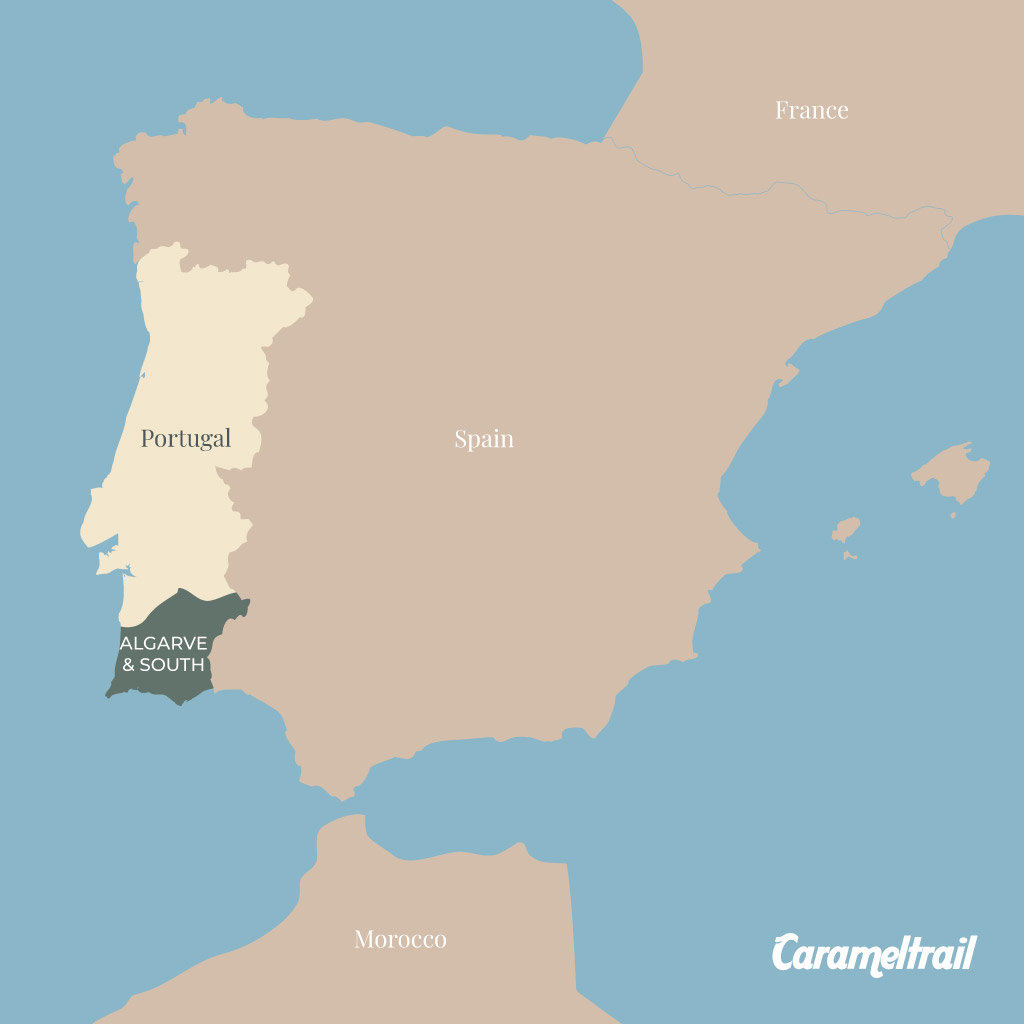
OUR EXPERIENCES FOR A TRIP TO THE ALGARVE AND SOUTH REGION
ENJOY THE WHOLE PROCESS OF CREATING YOUR TRIP
How We Plan Your Tailor-Made Trip to Portugal
01.
Tell Us About Your Dream Vacation!
Fill out our travel request form, email us, or book a free 30-minute call. Tell us about your interests, travel style, what you’d like to see and do, and your travel dates.
02.
We will prepare an exclusive travel proposal
Based on what you’ve shared, we’ll send you a unique trip proposal.
03.
Fine tuning
After you review the proposal, we’ll fine-tune your itinerary together until it fits your interests perfectly.
04.
Book your trip
When you’re ready, we’ll send you a link to our secure payment gateway to book your trip.
Portugal Travel FAQs
We recommend Google Maps. It’s accurate and up to date in both big cities and small villages across Portugal. Before your trip, download offline maps of the areas you’ll visit so you can use them without a data connection.
Yes, laundry services are commonly available in hotels across Spain, Portugal, and Morocco. Most hotels, especially mid-range and upscale ones, offer laundry and dry-cleaning services. If you’re staying in smaller hotels or hostels, they often have arrangements with local laundromats or provide self-service laundry facilities.
However, laundry services might be less readily available in rural areas or small villages compared to cities. Here you can choose the basic laundry services as many rural accommodations offer this service often for a small fee. Or you may take advantage of some local laundromats.
When traveling to Spain, Portugal, and Morocco, we advise you to have a travel insurance that should cover a few key areas to ensure a stress-free trip:
- Medical Coverage: Ensure it covers illness, injury, and any necessary medical treatments or hospital stays.
- Trip Cancellation/Interruption: This helps if your trip gets canceled or cut short due to unforeseen circumstances.
- Lost or Stolen Belongings: Coverage for lost luggage, passports, or personal items can save you a lot of trouble.
- Emergency Evacuation: In case of a serious medical issue, coverage for emergency transportation is crucial.
- Travel Delays: Compensation for significant delays can help cover unexpected expenses.
Having comprehensive travel insurance will give you peace of mind and let you enjoy your adventure without worries.
For exchanging money in Spain, Portugal, and Morocco, banks and official exchange offices are your best bet. ATMs also offer good rates. However, paying by card is often the easiest and most convenient option, as cards are widely accepted and usually give you the best exchange rates.
In Spain and Portugal, most tourist sites and public areas welcome photography. However, some museums, churches, and historical sites may have restrictions, especially regarding flash photography. Always look for signs or ask staff if you’re unsure.
In Morocco, photography rules can be a bit stricter. While many public places and markets are photo-friendly, some religious sites, palaces, and government buildings prohibit photography. Additionally, always ask for permission before photographing people to show respect for local customs.
Please always check for any specific rules at each site to ensure you’re following local guidelines.
In Spain and Portugal, it’s generally acceptable to take photos in markets and public places. Most people don’t mind, but it’s always polite to ask first, especially if you’re taking close-ups of individuals or their stalls.
In Morocco, it’s a bit different. While taking photos in markets is usually okay, it’s important to be respectful. Always ask for permission before photographing people, as some may find it intrusive. If you’re unsure, a friendly gesture and a smile can go a long way.
Enjoy capturing the beautiful moments on your trip, and remember to be considerate of local customs and people’s privacy!
In Spain and Portugal, Wi-Fi is widely available in most hotels, cafes, and public areas, especially in cities. You can expect free and reliable connections in many places.
Morocco also offers good Wi-Fi coverage in hotels and cafes in popular tourist destinations like Marrakech and Casablanca, though it can be more variable in rural areas. To ensure you stay connected, consider getting a local SIM card or bringing a portable Wi-Fi hotspot.
Enjoy your trip while you stay connected!
During the day it’s perfectly acceptable to wear shorts and sneakers. However, if you plan to dine at restaurants, it’s better to opt for longer pants. In these countries, people tend to dress more formally than in the US.
While speaking the local language can enrich your experience, many tourism professionals and younger people speak English in Spain, Portugal, and Morocco. However, learning a few basic phrases in the local language is always appreciated and can be very useful.
In Spain and Portugal, the currency is the euro (€). In Morocco, the currency is the Moroccan dirham (MAD). It is easy to exchange money at airports, banks, and exchange offices in major cities. Additionally, ATMs are widely accessible.
In Spain and Portugal, vegetarian and vegan options are increasing, especially in large cities and tourist areas. In Morocco, while the traditional diet includes meat, there are many vegetarian dishes available, especially in markets and tourist restaurants.
Each country has its own customs and traditions. In Spain, it is common to greet with two kisses on the cheek. In Portugal, people are very polite and appreciate good manners. In Morocco, it is important to dress conservatively, especially in rural and religious areas, and always ask permission before taking photographs of people.
U.S. citizens don’t need a visa for tourist stays of up to 90 days within any 180-day period in Spain and Portugal, which are part of the Schengen Area. Morocco also allows U.S. citizens to visit visa-free for up to 90 days. Since entry rules can change, always check official sources before you travel.
In Spain and Portugal, tap water is generally safe to drink. In Morocco, it is advisable to drink bottled water to avoid stomach issues, especially in rural areas.
In Spain and Portugal, the standard voltage is 230 V (50 Hz), with type C and F plugs. In Morocco, it’s 220 V, with type C and E plugs. We recommend bringing a universal plug adapter.
Driving in Spain and Portugal is relatively easy, especially if you’re used to driving on the right. Both countries have well-maintained highways, and road signs follow international standards. Traffic can be heavy in major cities, so we usually recommend renting a car only for the rural parts of your trip, where it lets you explore scenic routes and small towns. U.S. drivers should carry an International Driving Permit along with their license.
Most U.S. phones work in Portugal. Before you travel, check with your carrier about international plans. Alternatively, you can buy a local prepaid SIM card or an eSIM, which is usually cheaper for data.
Yes. Portugal is generally considered a very safe country for travelers. As in any popular destination, watch out for pickpockets in crowded areas, especially on Lisbon’s historic trams, and never leave your belongings unattended in public spaces, restaurants, or bars.
You can pay by card almost everywhere in Portugal, and contactless payments are very common. For cash, the easiest option is to withdraw euros from a bank ATM (called Multibanco in Portugal). Before you leave the U.S., ask your bank about international fees. When a card terminal or ATM offers to charge you in dollars, choose euros: it’s usually cheaper. We don’t recommend carrying large amounts of cash.
The best months to visit Spain, Portugal, and Morocco are March to May, September, and October. Our favorite months are April, May, June, September, and October. From June to August, expect hot, sunny, and dry weather in Spain and Portugal, especially inland and in the south. In Morocco, July and August are very hot, particularly in the south of the country.
Portugal uses 230 V, 50 Hz electricity and type C and F plugs. Most phone, tablet, and laptop chargers are dual voltage (the label says “100–240V”), so you’ll only need a simple plug adapter. If a device only says “110V” or “120V” (some hair dryers or straighteners, for example), you’ll also need a voltage converter.
Portugal has a good network of trains, highways, and domestic flights. The Alfa Pendular train connects Lisbon and Porto in about three hours, and there are flights to Madeira and the Azores. Depending on your itinerary, we’ll combine trains, flights, and private drivers so you can travel comfortably.
In both Spain and Portugal, people drive on the right-hand side of the road.
June, July, and August are sunny and dry, so bring sunglasses, sunscreen, and a hat, especially if you’re not used to strong sun.
Reviews from Travelers Who Visited Portugal
Read all 170+ traveler reviews, or see our ratings on Google and Trustpilot.
Ready to Plan Your Tailor-Made Trip to Portugal?
Prefer to talk first? Book a free 30-minute call with our team.