
Accessible Spain: Travel with All Five Senses
Spain has long been a dream destination for American travelers because of its history, food, and culture. However, one aspect that doesn’t always make the headlines is that Spain is also one of the most accessible destinations in the world. This accessibility extends beyond infrastructure to something deeper: its ability to offer every traveler authentic, sensory, and genuinely memorable experiences, regardless of their physical or sensory needs.
From carefully designed ramps winding through Seville’s medieval streets to museums reimagining how they share history, Spain has made a real commitment. It’s not just improvised solutions; it’s a national vision that understands beauty and culture belong to everyone.
At Carameltrail, we have spent years designing personalized trips for travelers with reduced mobility, visual impairments, hearing impairments, or those traveling with companions who need more thoughtful planning. We know that no two travelers are alike — and no two trips should be either.
YOUR TEAM ON THE GROUND: TRANSPORTATION, GUIDES, AND 24/7 SUPPORT
For many travelers with reduced mobility or sensory impairments, the greatest concern isn’t the destination itself, but the spaces in between. The airport transfer, moving between cities, or a visit that starts smoothly and then hits an unexpected barrier. That in-between space is exactly where Carameltrail makes a difference.
Every transfer is planned using fully adapted vehicles, such as vans equipped with ramps or lifts, with space for wheelchairs and mobility aids. Our drivers are trained to assist travelers with diverse functional needs. This isn’t an add-on available upon request — it’s built into every itinerary from day one.
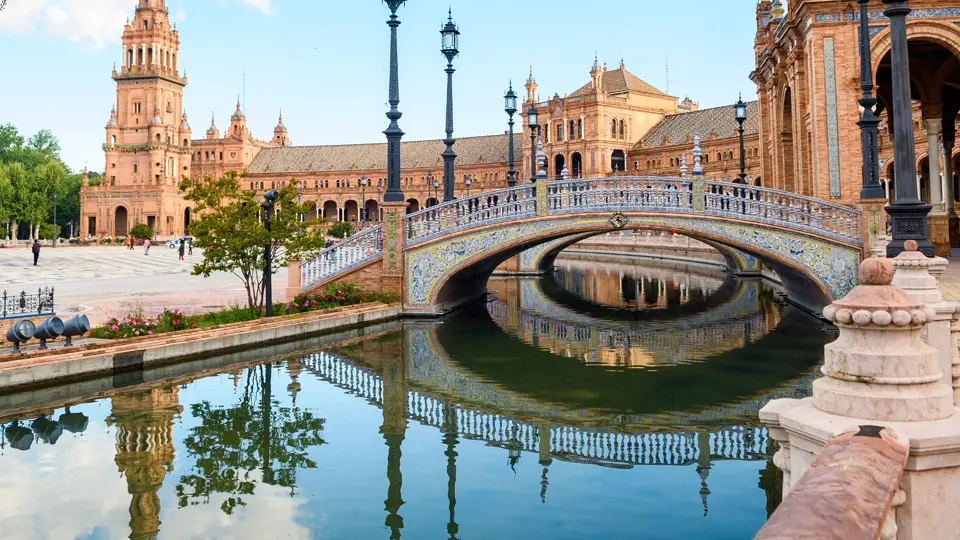
Our local guides are experts in more than just history or gastronomy. They are professionals with real experience in accessible tourism, skilled at anticipating challenges, adjusting the pace of each visit, and turning potential obstacles into elegant solutions. In Seville, Barcelona, and along the Camino de Santiago, every destination has a team of people who know the terrain and know it well.
And then there’s something that very few agencies honestly offer: real support during the trip. Carameltrail provides 24/7 assistance to all travelers while they’re on the road.
Whether it’s resolving an accessibility issue in the hotel room, addressing a transportation issue, or attending to any other last-minute need, there’s a real person on the other end of the phone who knows your trip, your profile, and your preferences. Not a generic call center. Your team.
Having the peace of mind that someone is there, attentive and ready to act, is part of the luxury too.
Travelers who have experienced this firsthand say it best. The kind of real-time support that makes a genuine difference:
“Angela and Paloma were always accessible and responsive to any questions or situations that arose. From helping us rent a car to pick up a friend to securing a new hotel on short notice, they were responsive, available, and incredibly helpful. That real-time support was truly the highlight of the experience.”
— Jim and Julie Matheson
HISTORIC CITIES WITH INCLUSIVE ROUTES: HISTORY WITHIN REACH OF ALL
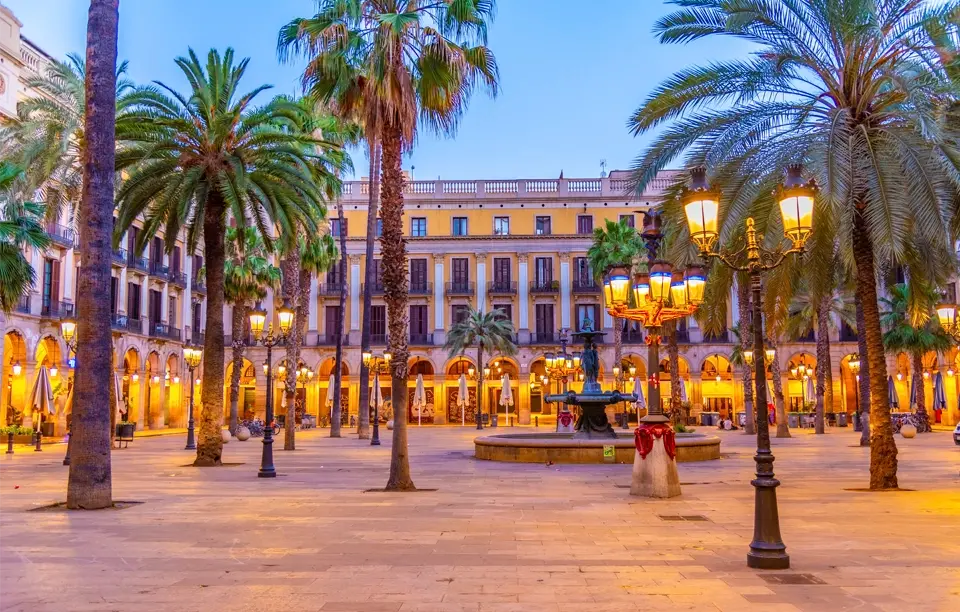
Visiting cities like Madrid, Seville, or Barcelona is an experience that stirs something inside you. However, historic cities present challenges, such as cobblestones, uneven terrain, and centuries-old museum staircases. The good news is that Spain has invested significantly in making these environments accessible without losing any of their character.
The Museo del Prado in Madrid offers adapted itineraries, multilingual audio guides for visually impaired visitors, and complimentary wheelchairs. The Alhambra in Granada — arguably Spain’s most visited monument — has fully accessible routes throughout much of the Nasrid complex. In Seville, the cathedral and the royal Alcázar have incorporated accessible entrances and tactile materials that allow visitors to touch faithful replicas of their most iconic architectural details.
At Carameltrail, we plan every cultural visit in advance. We reserve the accessible entrances, coordinate with museums to determine the most suitable pace and route, and select local guides who specialize in inclusive tourism. A visit to the Prado should not depend on whether the elevator is working that day.
For travelers with specific needs, knowing that every detail has been thought through in advance is what makes the difference between a stressful trip and a truly accessible Spain vacation:
“When we had an issue that required us to have a wheelchair in order to conduct one of the city tours, you were ‘Johnny on the spot’ and we were able to continue with our itinerary as planned.”
— Alex & MaryLou Padilla, Santa Fe, USA

SENSORY CULTURE: SEEING WITH YOUR HANDS, LISTENING WITH YOUR BODY
Spain has recognized that cultural accessibility extends well beyond ramps and elevators. The country’s finest museums have developed programs that allow visitors to experience art with all five senses.
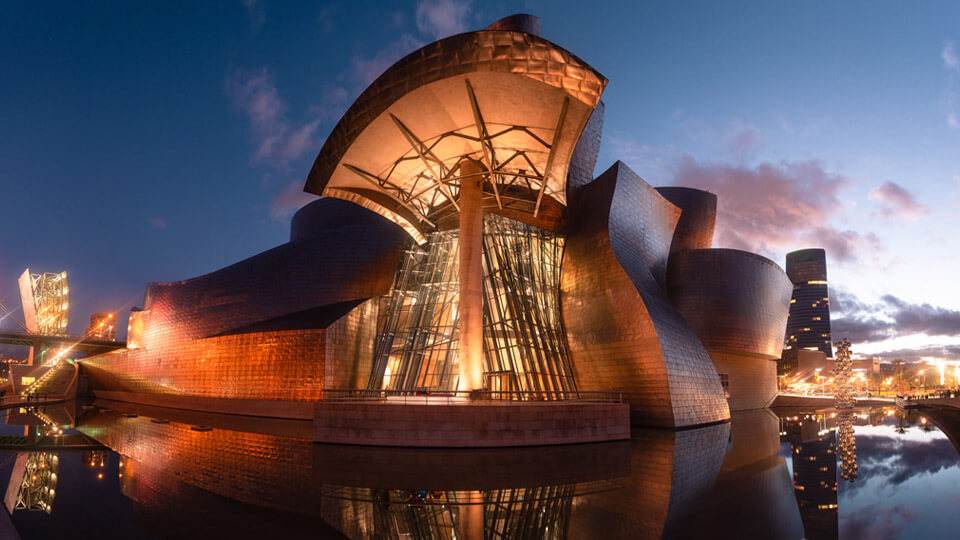
The Museo Thyssen-Bornemisza in Madrid offers guided tours for the visually impaired, using tactile reproductions and detailed verbal descriptions of the artwork. The Guggenheim Museum Bilbao runs educational programs adapted for visitors with diverse functional needs. In Barcelona, the Museu Nacional d’Art de Catalunya has developed Braille materials and high-quality audio guides so that everyone can participate in the experience.
Beyond the great museums, Spain offers cultural experiences that are accessible by nature, such as an intimate flamenco performance in a private tablao, a wine tasting in a La Rioja cellar where the senses of smell and taste take center stage, and a traditional artisan market where you can learn about an item through touch and scent before even asking the price.
NATURE WITHOUT BARRIERS: SPAIN’S NATIONAL PARKS OPEN THEIR DOORS
Spain is one of Europe’s most biodiverse countries, and a significant part of its natural heritage is now accessible to travelers with reduced mobility or sensory impairments.
The Doñana National Park in Andalusia offers accessible routes in adapted vehicles, allowing visitors to observe the unique wildlife and landscapes of this extraordinary wetland without having to navigate uneven terrain. In the Pyrenees, sections of the Ordesa Natural Park have been adapted with stabilized paths and accessible viewpoints. In the Canary Islands, Mount Teide welcomes visitors in wheelchairs each year thanks to accessible routes that reach areas with breathtaking views.
Nature offers something no museum can replicate: the total experience of being fully present in a place. You can feel the wind, smell the sea or a pine forest, touch the earth, and hear the birds. For travelers with visual impairments, a guided walk through a well-designed natural environment can be one of the most profound experiences of the trip.
ACCESSIBLE GASTRONOMY: SPAIN IS MEANT TO BE TASTED BY EVERYONE
Spanish cuisine is a total sensory experience, and the barriers to enjoying it are minimal. Sitting at a well-chosen table and savoring the flavors of Spain requires no special effort, just thoughtful planning.
Many of Spain’s finest restaurants offer fully adapted access, and in major cities, it’s relatively easy to find high-quality, completely inclusive options. Carameltrail always selects venues with each traveler’s specific needs in mind, from a Michelin-starred restaurant in San Sebastián to a seaside chiringuito in Málaga.
Experiences such as a private, accessible cooking class, a guided tour of a local food market, or an olive oil tasting at an Andalusian mill engage all the senses and carry no significant access barriers. Spain tastes extraordinary. And that’s for everyone.
Planning a customized accessible trip to Spain means anticipating every need — even the ones travelers don’t always think to mention:
“A HUGE bonus was the attention Angela paid to my concerns with scent/fragrance at each destination.”
— Lynn and Jay Myers, San José, CA. USA

CARAMELTRAIL AND ACCESSIBLE TRAVEL: A TRIP DESIGNED AROUND YOU
At Carameltrail, we don’t organize accessible trips as a separate category. We plan them the same way we plan every trip: by starting with you.
When a traveler with reduced mobility, a visual impairment, or any other specific need contacts us, the process is exactly the same as with any other client: we take the time to understand who you are, what you want to experience, and what genuinely excites you. Then, we build an itinerary that fits you — not a generic template that sort of works.
This includes the meticulous selection of accessible hotels that meet real standards (not just written declarations), coordination with transportation providers who have the right adapted vehicles, the choice of local guides with genuine experience in inclusive tourism, and the detailed planning of each visit to eliminate the logistical friction that can turn a magical moment into a frustrating one.
Because Spain has more than enough magic for everyone. You just need to know how to find it.
Are you thinking about an accessible trip to Spain? Tell us your story.
We would love to design yours.