
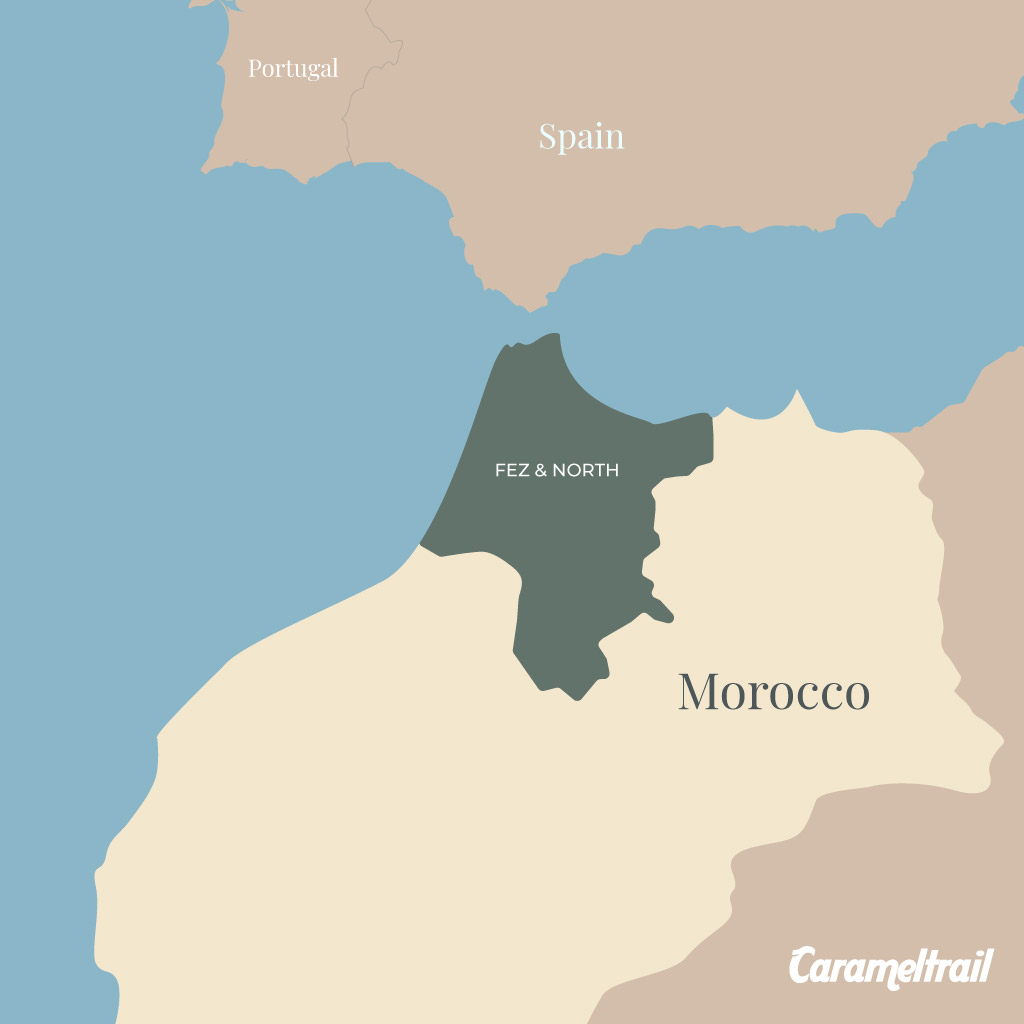
Northern Morocco
NORTHERN REGION OF MOROCCO
Private Tours in Fez and Northern Morocco
Carameltrail designs private, tailor-made trips to Fez and Northern Morocco for American travelers. We’re a licensed travel agency based in Spain (C.I.C.M.A. No. 2642), founded in 2011.
Northern Morocco offers a unique blend of European and African influences. From the imperial city of Fez and its medieval medina to the blue streets of Chefchaouen, the Rif Mountains, and the port city of Tangier, it’s a region full of history, culture, and stunning landscapes.
Fez & Northern Morocco at a Glance
Tangier
Tangier, one of the largest cities in the region, is often called the gateway to Africa. Set on the Strait of Gibraltar, just one hour by ferry from Tarifa in southern Spain, it’s easy to combine with a trip through Andalusia. Here you can visit the Kasbah Museum, the Tangier American Legation, the first property the United States ever owned abroad, and the Caves of Hercules, linked by legend to the Greek hero.
With its strategic location, Tangier has a long history as a center of trade and cultural exchange, dating back to the Phoenician era. The city has been home to a diverse mix of peoples, including Berbers, Arabs, and Europeans, which is reflected in its architecture, cuisine, and traditions.

Tangier is also famous for its bustling markets, which are a kaleidoscope of colors, scents, and sounds. The Grand Socco is the city’s main square, and it is surrounded by a maze of narrow streets and alleys filled with shops selling everything from traditional Moroccan textiles and handicrafts to fresh seafood and spices. Visitors can sample delicious Moroccan street food, such as bissara, a hearty bean soup, and msemen, a type of Moroccan flatbread.
Tangier, with its long coastline and bustling port, is a popular destination for water sports enthusiasts. Here you may practice activities such as surfing, windsurfing, and kiteboarding, or simply relax on one of the many beaches.
The beaches of Asilah and Tangier are perfect for relaxing in the sun while enjoying beautiful Atlantic views
Chefchaouen and the Rif Mountains
One of the must-visit destinations in the north of Morocco is Chefchaouen, a charming blue-washed town nestled in the Rif Mountains. Known for its picturesque alleyways, vibrant markets, and stunning architecture, Chefchaouen is a haven for photographers and artists. Visitors can spend their days exploring the town’s winding streets, admiring the traditional blue and white buildings, and sampling delicious Moroccan cuisine in one of the many local restaurants.
The town’s name, which means “look at the horns” in Berber, refers to the two mountain peaks that rise above it.


The Talassemtane National Park, near Chefchaouen, is a protected area that is home to a variety of flora and fauna, including Barbary macaques, which are native to the region.
The Rif Mountains, which surround Chefchaouen, offer numerous hiking trails with stunning views of the surrounding valleys and hillsides.
Morocco is a land of contrasts
Fez
Fez is famous for its medieval architecture, traditional crafts, and labyrinthine medina. It’s also home to Al-Qarawiyyin, often described as the oldest continuously operating university in the world.
One of Morocco’s four imperial cities, Fez was founded in the 8th century and served as the country’s capital several times throughout its history.
One of the most impressive features of Fez is its medina, which is a UNESCO World Heritage Site. The medina is the old walled city and is one of the largest and best-preserved medieval cities in the world. It is a maze of narrow streets, alleyways, and souks (markets) selling everything from spices and textiles to pottery and leather goods.


Fez is also famous for its traditional crafts, particularly its ceramics, textiles, and leather goods. The tanneries in the medina, which use centuries-old techniques, are a must-visit attraction for tourists.
Besides, the city has a rich culinary tradition and is known for dishes such as tagine, couscous, and pastilla. There are numerous street food vendors selling a variety of snacks and sweets.
There are many landmarks and historic sites worth visiting here. Some of the most notable include the Bou Inania Madrasa, the Dar Batha Museum, and the Al-Qarawiyyine Mosque.
Fez is steeped in history and culture
Volubilis, Meknes, and Asilah
Further inland, the ancient Roman city of Volubilis is a UNESCO World Heritage Site that offers visitors a glimpse into Morocco’s rich history. Founded in the 3rd century BCE, Volubilis was an important center of trade and culture, with impressive architectural and artistic achievements. You can explore the ruins of the city, including the impressive Triumphal Arch, the Capitol, and the Basilica.
Asilah is a charming coastal town with a rich history and a vibrant arts scene. It is known for its annual mural festival, which attracts artists from around the world to paint the town’s walls with colorful and inspiring murals.
Less than an hour from Volubilis, Meknes is another of Morocco’s imperial cities, famous for the monumental Bab Mansour gate and the grand legacy of Sultan Moulay Ismail.


The Food in Northern Morocco
Food is an essential part of Moroccan culture, and the north of the country is no exception. Its cuisine combines Moroccan, Andalusian, and Spanish influences. Must-try dishes include tagine, a slow-cooked stew of meat or vegetables; couscous; and pastilla, a sweet and savory pie that is a specialty of Fez.
Another popular dish is harira, a hearty soup of tomatoes, lentils, chickpeas, and spices, traditionally served during Ramadan. And don’t miss a glass of mint tea, a symbol of Moroccan hospitality, with sweet treats like chebakia, made with honey and sesame seeds, or kaab el ghazal (“gazelle horns”).
Where to Stay in Northern Morocco
Northern Morocco offers beautiful places to stay, from elegant hotels to traditional riads. In Fez and Tangier, you can choose a luxury hotel or a more intimate experience in a restored riad in the heart of the medina.
A riad is a traditional house or palace built around a central courtyard, now often converted into a boutique hotel. Decorated with intricate tilework, colorful textiles, and ornate metalwork, riads offer a peaceful oasis away from the bustling streets.
Discover Fez and Northern Morocco
Visiting the north part of Morocco is a unique and unforgettable travel experience, offering a mix of history, culture, and natural beauty. From the bustling markets and vibrant cities of Tangier and Chefchaouen to the stunning landscapes of the Rif Mountains and the ancient ruins of Volubilis, there is something for everyone in this region.
Whether you’re exploring the narrow alleyways of a medina, hiking through a national park, or relaxing on a beach, northern Morocco is a destination that will leave a lasting impression. And with its delicious cuisine and warm hospitality, you will want to return again and again.


Have questions first? Book a free 30-minute call with our team.
Fez & Northern Morocco Travel FAQs
Our Private Experiences in Fez and Northern Morocco
Tangier, Morocco, is a beautiful and culturally rich city that has long been a hub of international trade and tourism. From the bustling markets of the medina to the stunning coastline and historical landmarks, there is no shortage of things to see and do in Tangier. If you are planning a trip to this vibrant city, we offer you the perfect way to explore its hidden gems.

Chefchaouen, also known as the Blue City, is a small town in Northern Morocco famous for its distinctive blue-painted buildings, narrow streets, and picturesque alleyways. The town is easy to explore on foot and offers plenty of things to do, from visiting the Kasbah to hiking in the nearby Rif Mountains. Don’t miss trying the local specialty, Ras el Hanout, and traditional Moroccan tea.

Did you know that Fez was the capital of Morocco until 1912? Or that its medina is a labyrinth of about 10,000 alleys that are too narrow for cars?
While much has changed in Fez over time – as it has gone from imperial capital to one of Morocco’s biggest cities, much has also stayed the same. This city remains Morocco’s spiritual heart thanks to the strong ties it has with the religious schools and Islamic scholars.
If you’re planning a trip to Morocco, the Medina of Fez is a must-see destination. This ancient walled city is home to some of the most stunning architecture and cultural heritage in the world. A private tour of the Medina of Fez is the perfect way to experience all that this city has to offer, without the crowds and chaos of a group tour.

Fez is known for its well-preserved medieval old town, Islamic architecture, and bustling souks. Above all, the Moroccan Islamic architecture and art are characterized by intricate geometric designs, decorative tiles, ornate calligraphy, and traditional arts such as ceramics and weaving. Stick around to find out more.

Nestled in the heart of the fertile Saiss plain, Meknes is a city of contrasts, where ancient architecture and modern infrastructure coexist in perfect harmony. As you wander through its bustling streets and labyrinthine alleys, you will be transported back in time to a world of sultans, palaces, and lavish gardens.

Nestled in breathtaking landscapes, Tetouan is a captivating city steeped in rich history and cultural heritage. Embark on a Tetouan historical tour to explore the city’s hidden gems. Let’s dive into the heart of Tetouan and unravel its wonders!

Morocco is a country from North Africa, bordered by the Atlantic Ocean to the West and the Mediterranean Sea to the North. The country has a rich history and culture, with influences from Berber, Arab, and European civilizations. It is known for its vibrant cities, stunning landscapes, and delicious cuisine.

There’s no better way to truly experience a culture than by stepping into a local home, rolling up your sleeves, and cooking alongside the people who know it best.
In Morocco, food is a celebration, a legacy, and a warm embrace of hospitality.

One of the hidden gems of Morocco is the Talassemtane National Park, located in the Rif Mountains. The park offers a unique opportunity to explore of Northern Morocco while experiencing the local culture and history.
Explore Other Regions of Morocco
Read all 170+ traveler reviews, or see our ratings on Google and Trustpilot.
Ready to Plan Your Private Trip to Fez and Northern Morocco?
Prefer to talk first? Book a free 30-minute call with our team.