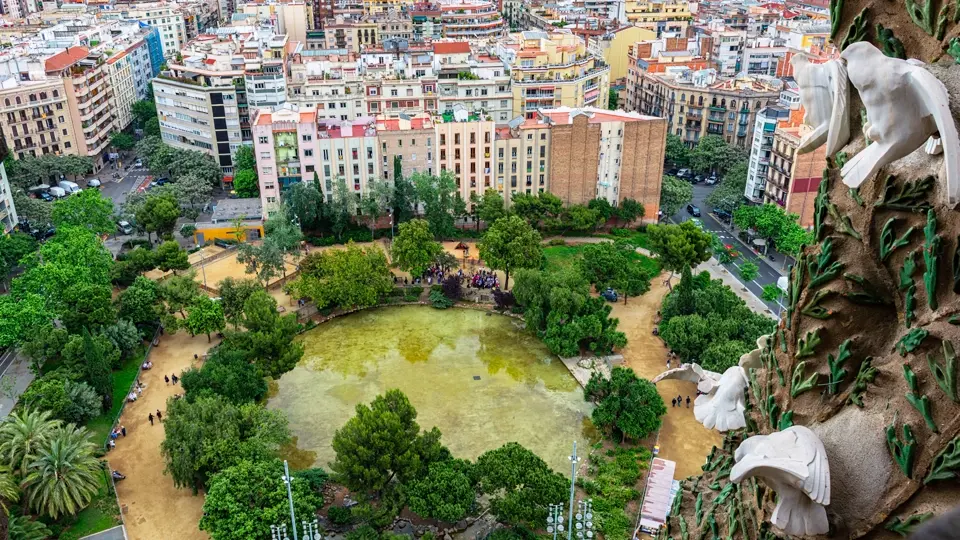

Sustainable Routes Through Spain: Travel with a Positive Impact
Traveling well isn’t just about choosing the right destination. It’s a way of being in the world.
More and more American travelers arrive in Spain — and in Portugal and Morocco — carrying a question that goes beyond the itinerary: how can I experience all of this without leaving a negative footprint? How do I choose where to sleep, what to eat, how to get around? Is it possible for a luxury trip and a responsible trip to be one and the same?
The answer is yes. And Spain, with its high-speed rail network, its locally rooted gastronomy, its historically rehabilitated architecture, and its rich tradition of artisan culture, is one of the best settings in the world to prove it.
At Carameltrail, we are not an agency that specializes exclusively in sustainable tourism. We design extraordinary, personalized journeys — and we believe that traveling with sensitivity toward your surroundings, supporting local producers, choosing train travel whenever possible, and selecting accommodations with history and soul is not a constraint. It’s simply traveling better.
These are some of the routes we have designed with that philosophy as the guiding thread.
THE TRAIN AS THE STAR: TRAVELING THROUGH SPAIN WITHOUT GIVING ANYTHING UP
If there is one element that connects all of our sustainable itineraries, it’s the train. And in Spain, that is not a compromise — it’s a privilege.
Traveling by high-speed train between cities is faster than flying when you count total door-to-door time, more comfortable, and with a significantly lower carbon footprint. It’s also a different way of seeing the landscape — the plains of Castile, the fields of La Mancha, the first glimpse of the Guadalquivir — views that would be invisible from an airplane window.
In our 12-day sustainable itinerary through Spain’s highlights, the train connects every city: Barcelona, Seville, Córdoba, Granada, and Madrid are all linked by rail, with private vehicle transfers reserved only for airports and destinations the rail network doesn’t reach. The result is a smooth, stress-free journey that drops you right in the heart of each city — no rental car needed.
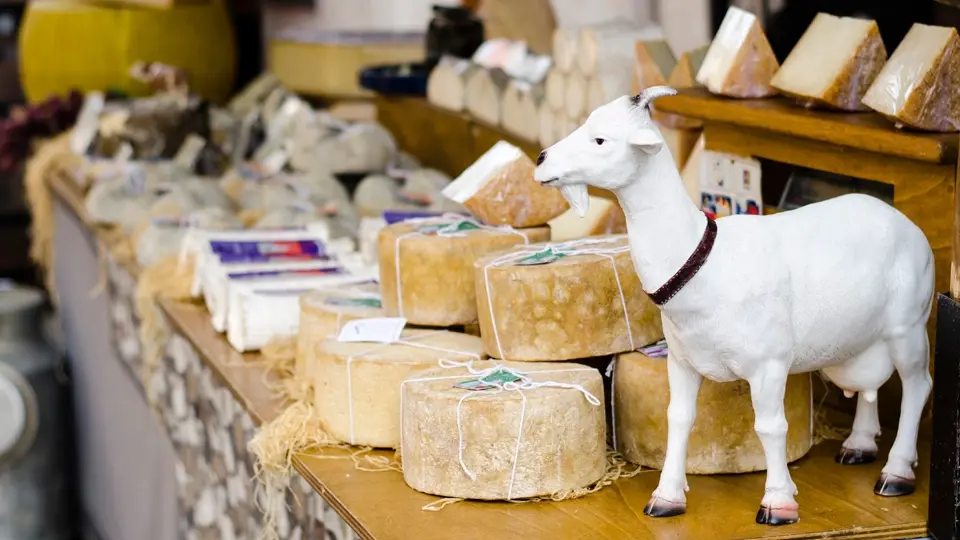
Local food markets, small producers, guides who know their cities because they grew up in them. Every gastronomic experience in this itinerary — from the food tour in Barcelona to the paella cooking class in Madrid — is designed to connect travelers with the local economy, not global chains.
Those who have experienced this way of traveling with Carameltrail say it best. For those who value depth and authenticity over simply checking off monuments:
“The private tours in Spain allowed us to learn more about the art and architecture than I would have otherwise. My favorite part of European trips is usually the history, art and architecture — and this time I got to experience all of this at a completely different level.”
— Samreen Siddiqui, Philadelphia, USA
PORTUGAL BY TRAIN: FROM PORTO TO LISBON, WITH SOUL AND CONSCIENCE
Portugal may be the European country that most naturally embodies the idea of an authentic, sustainable journey. Its cities are human in scale, its gastronomy is deeply rooted in the land, and its rail network connects the main destinations efficiently and with genuine charm.
In our 9-day sustainable itinerary through historic Portugal, the train is once again the protagonist: from Porto to Guimarães, then to Coímbra, and finally to Lisbon. No driving, no searching for parking, no time lost on highways. Arrive in the center of each city and walk.
Porto, with its Ribeira district — a UNESCO World Heritage site — its neighborhood bakeries, its local wine bars, and a rhythm that always makes you want to stay longer. Guimarães, the city where Portugal was born, with its thousand-year-old castle and its medieval streets that remain almost entirely intact. Coímbra and its university — among the oldest continuously operating in the world — with a Baroque library that feels lifted from an adventure novel. And Lisbon, always Lisbon, with the Tagus River, the historic trams, the petiscos, and the nights of fado.
All of it by train, at a pace that lets each place sink in. The light shifts. The journey becomes the destination.

MOROCCO BY TRAIN: THE NORTH THAT FEW AMERICANS KNOW
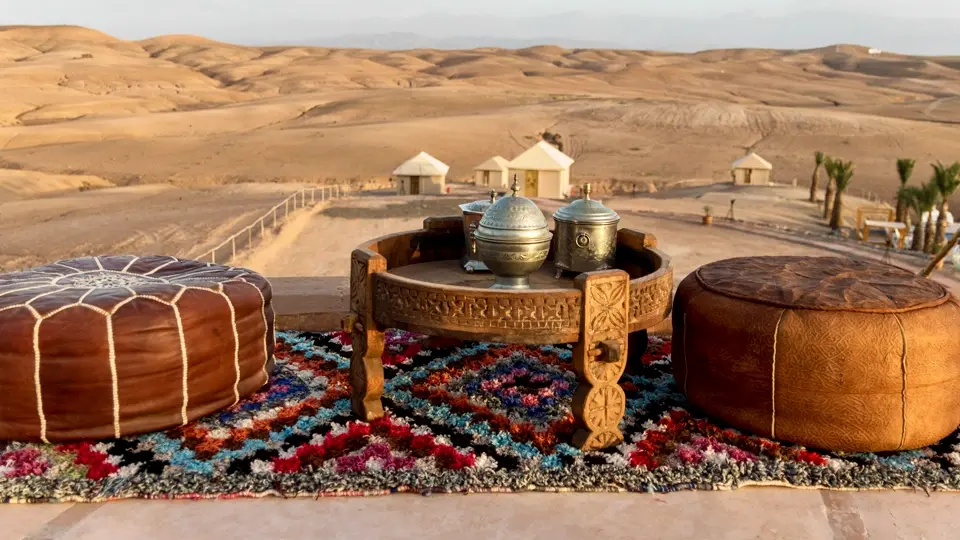
Morocco contains multitudes. The one of Marrakech’s riads and the Sahara is the most familiar. But there’s another — the north, the imperial cities, the Atlantic and Mediterranean coast — that surprises precisely those who arrived with fixed expectations.
In our 8-day sustainable itinerary through northern Morocco by train, the journey begins in Casablanca — with a visit to the Hassan II Mosque, the second largest in the Islamic world — and continues by train to Tangier, the city that for decades was a refuge for European and American writers and artists, where the Atlantic and the Mediterranean meet in front of the Caves of Hercules.
From Tangier, a day trip to Chefchaouen: the blue town, Morocco’s most photographed, where walls washed in shades of indigo and sky blue create a scene that seems deliberately painted. And finally Fez — the largest medieval medina still in active use in the world — where leather tanners work with centuries-old methods and Almohad architecture is preserved with an integrity few cities anywhere can still claim.
Three countries, three cultures, one shared travel philosophy: more trains, more local markets, more guides who are from here, more hotels with history. Less impact, more depth.
ACCOMMODATIONS WITH SOUL: THE CHOICE MATTERS
A fundamental part of responsible travel is where you sleep. And this is where Carameltrail’s approach becomes most concrete.
In our sustainable itineraries, we prioritize accommodations that have something to say: 18th-century palaces in Coímbra that have spent decades preserving the city’s architectural heritage. Boutique hotels in Seville’s Barrio de Santa Cruz, set within carefully restored 15th-century Andalusian townhouses. Riads in Morocco’s medinas that reinvest in the preservation of urban heritage. Rural estates with a Michelin Green Star in Aragon’s Matarraña region, with menus built entirely around their own organic production.
These aren’t necessarily more expensive options. They are simply better chosen ones. Every dollar a traveler spends at an accommodation with history and local roots is a dollar that doesn’t go to a global hotel chain — and does go to the neighborhood economy, the village, the family that has spent generations caring for that building.

TRAVELING WELL: WHAT CARAMELTRAIL MEANS BY RESPONSIBLE TOURISM
We prefer the train to the plane when time allows. We choose local guides because they are better — and because it directly benefits the communities we visit. We select restaurants that work with nearby producers because the food tastes better. We recommend local food markets and family-run wineries because those experiences are more memorable than anything a chain restaurant could offer. We suggest accommodations with personality because where you sleep is part of the trip.
All of that existed long before ‘sustainable tourism’ became a marketing concept. And it will still be there when it stops being one.
What is new is the formalization of itineraries specifically designed with these criteria as the central thread — available for travelers who want to know exactly how and why each choice was made. Transparency, in the end. Which is also a form of respect for the traveler.
“Each of our guides had expert knowledge of the region we were visiting — and more importantly, they became our friends. We never felt like clients. We felt like we were traveling with friends from Spain and learning and experiencing their country through their eyes.”
— Constantine Bulauitan, Red Banks, New Jersey, USA

YOUR RESPONSIBLE TRIP, YOUR WAY
Sustainability isn’t a fixed menu. There is no such thing as the perfect trip from an environmental standpoint, and we don’t believe in guilt as a driver of travel.
What we do believe is that small, well-made choices — the train instead of the domestic flight, the local market instead of the supermarket chain, the neighborhood guide instead of the mass tour, the hotel with history instead of the anonymous block — make a trip richer, more authentic, and along the way, more responsible.
If you’re thinking about a trip to Spain, Portugal, or Morocco and you’d like the way we design it to reflect these values, tell us. We always start from what you want to experience — and from there, we build an itinerary that fits the way you see the world.
Because traveling well is, above all, traveling with your eyes open.
“Our experience with Carameltrail was fantastic. They helped us plan and execute our 12-day trip to Spain and Portugal. What was most impressive to us was the attention to detail.”
— Roy and Terri Libel, Springfield, Missouri, USA
Interested in a responsible, personalized trip through Spain, Portugal, or Morocco? Tell us how you picture it.