
The Spanish Fan: How an Ancient Gesture Came Back into Fashion
Some objects encapsulate an entire culture in a single gesture. The fan is one of them. Open one to reveal centuries of history, social rituals, craftsmanship, and a unique approach to climate, body, and elegance. In Spain, the fan is more than just a souvenir; it’s a living memory and an accessory that’s once again winning over younger generations. At Carameltrail, a local agency specializing in Spanish culture with expert guides, we enjoy telling stories that reveal a country through its everyday life, beauty, and apparent simplicity.
THE FAN’S JOURNEY TO BECOMING A SPANISH ICON SPANS A THOUSAND YEARS
Although we now almost automatically associate it with Spain, its origin lies much further afield. Its earliest forms appeared in China, Japan, and India, where it was used for cooling purposes as well as in imperial rituals, religious ceremonies, and dances. In Asia, the fan symbolized power, hierarchy, and refinement.
A big change occurred in the 16th century when the folding fan entered Europe via Spain through trade and diplomatic routes with the East. It’s no coincidence that it found particularly fertile ground here: the climate, outdoor social life, and taste for gesture and theatricality quickly made it an essential object.
From royal courts to Andalusian courtyards, the fan became part of everyday life, symbolizing distinction, femininity, and sophistication while also serving as a practical tool against the heat. Over time, it spread from the elite to all social classes, adapting to different styles, materials, and uses.
THE LANGUAGE OF THE FAN: WHEN A GESTURE SAID IT ALL
One of the most fascinating aspects of its history in Spain is the language of the fan. This unwritten code allowed women to communicate in public without saying a word. In a society where social norms were strict, the fan became a silent channel of expression.
Closing the fan suddenly could signify anger, resting it on the right cheek could signify interest, moving it slowly could signify boredom, and fanning quickly could signify nervousness or impatience. While the historical accuracy of each gesture varied according to the period and context, what’s important is what they represent: the fan as a space of freedom, ingenuity, and complicity.
Today, this language is no longer consciously used, but its spirit remains. The fan continues to be an extension of the body, setting the pace, attitude, and presence.
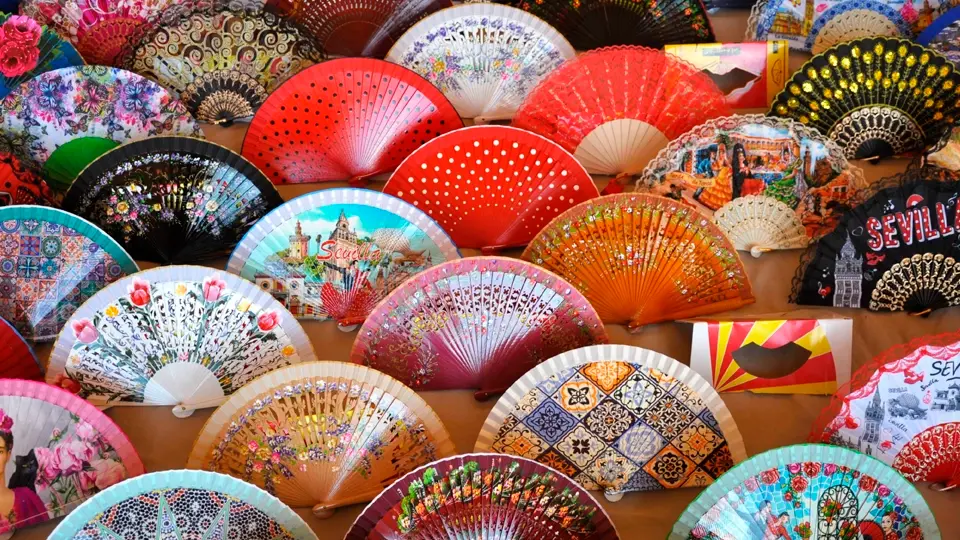
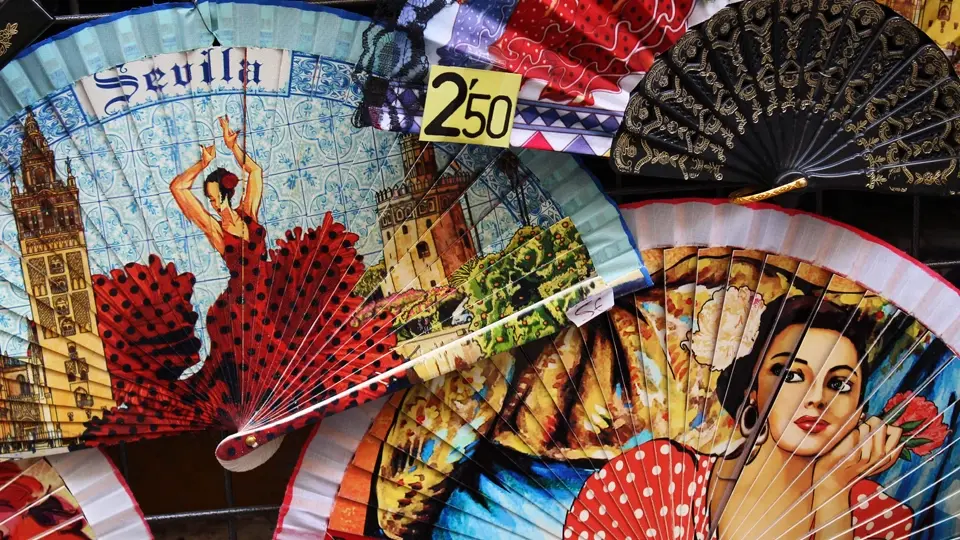
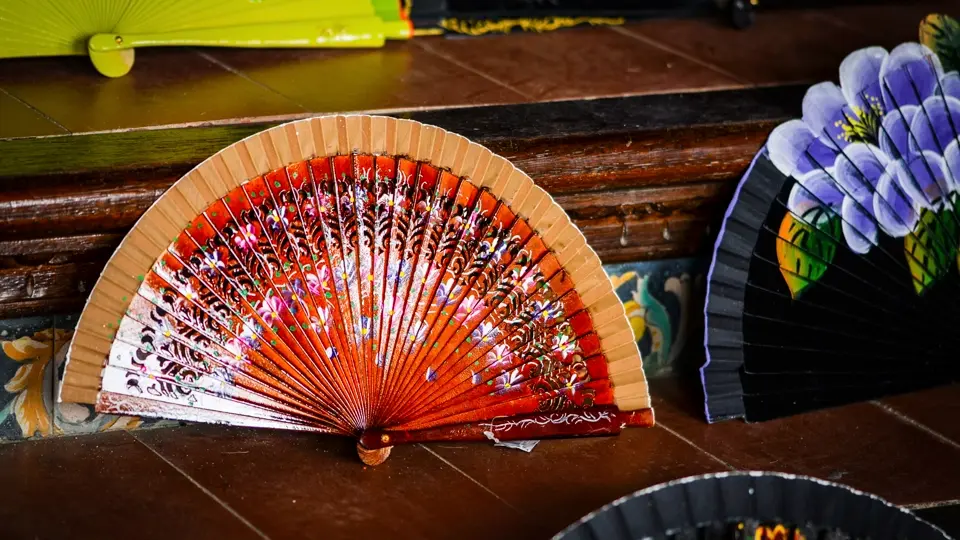
Traditionally, Spanish fans were made from fine, durable materials. The ribs were usually made of wood, mother-of-pearl, bone, or tortoiseshell. The country, or flexible part, could be made of silk, cotton, linen, or hand-painted paper. Lace, embroidery, and openwork transformed each fan into a work of art.
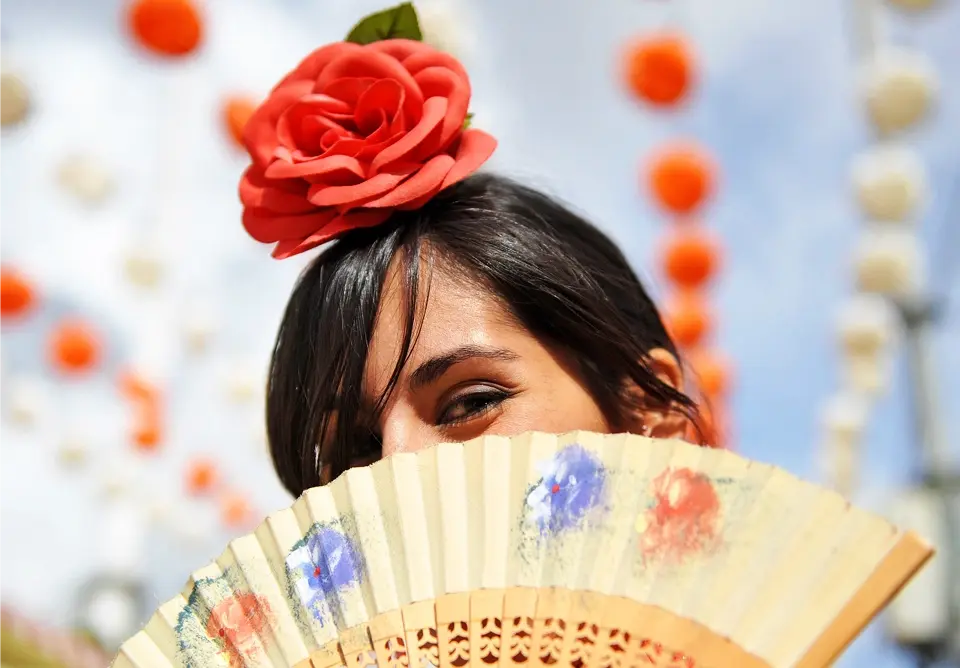
MATERIALS THAT TELL STORIES
The craft of fan-making has been passed down from generation to generation, especially in areas such as Valencia and Andalusia. These family workshops require time, precision, and knowledge for each step, such as polishing, openwork, and painting. In a world dominated by rapid production, these fans represent an alternative understanding of luxury, one based on a job well done.
From Carameltrail’s perspective, this type of craftsmanship is essential to understanding Spanish identity and providing American travelers with an authentic experience, one that is far from clichés and closer to the people who keep these traditions alive.
From the past to the present, the fan is back in fashion. In recent years, the fan has undergone a true reinvention. Contemporary designers, independent brands, and graphic artists have reimagined its form, turning it into a modern, ironic, urban accessory. Protest messages, pop illustrations, vibrant colors, and extreme minimalism coexist with classic designs.
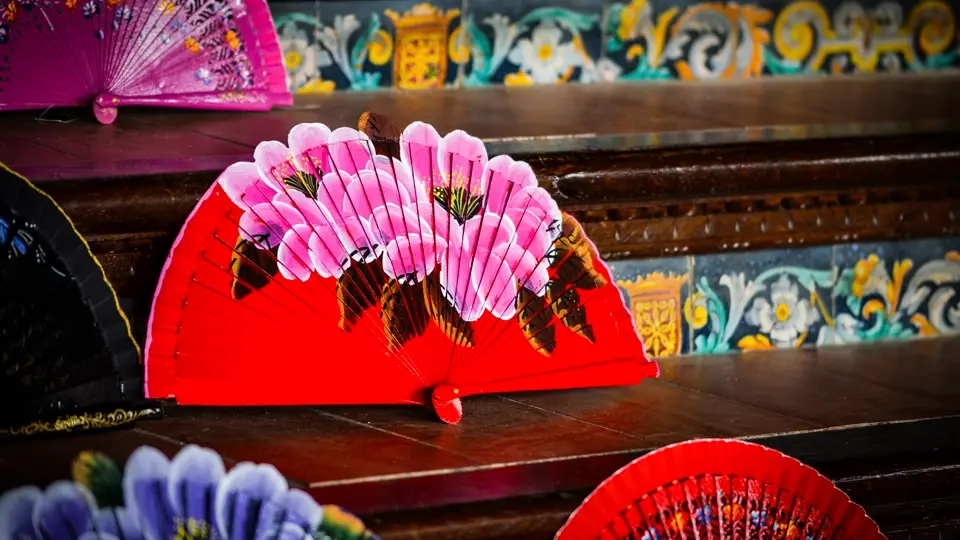
FROM THE PAST TO THE PRESENT: THE FAN IS BACK IN FASHION
Among young people especially, the fan is no longer “something for grandmothers” but has become a cool, practical, and sustainable object. At festivals, on terraces, at demonstrations, and on beaches, it is reappearing as a symbol of identity and personal style. Compared to air conditioning, fans are silent, portable, and environmentally friendly.
Of course, it remains an essential part of the Spanish summer. It’s hard to imagine Spain in July or August without fans: they’re as much a part of the landscape as lowered blinds or shaded squares.
It is an unexpected accessory for parties and special occasions. Although December is not a hot month, the fan also has its place in the cold. At weddings, parties, cultural events, and Christmas celebrations, fans reappear as elegant accessories made of more sophisticated materials, such as lace, dark silks, and tones of ivory, black, and burgundy.
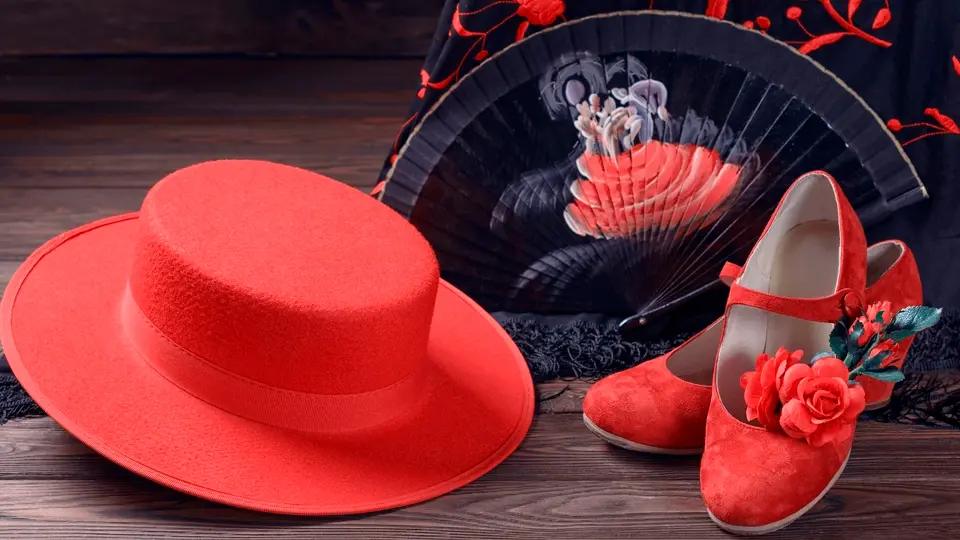
AN UNEXPECTED ACCESSORY FOR PARTIES AND SPECIAL OCCASIONS
Giving a quality fan as a gift during this time of year offers something different: a meaningful and beautiful gift. It’s not just a functional object; it’s a piece with history, capable of transcending seasons and fashions.
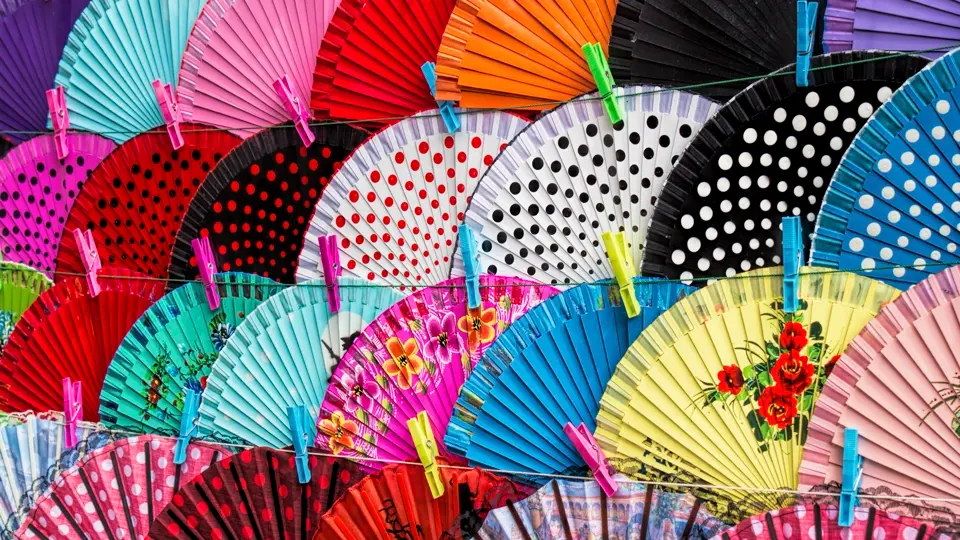
IT IS THE PERFECT SOUVENIR FOR AMERICAN TRAVELERS
For those visiting Spain from the United States, the fan is one of those souvenirs that makes sense to take home. Lightweight and easy to carry, it serves as both a personal keepsake and a gift for someone special.
At Carameltrail, we recommend looking for handmade fans made in Spain and understanding who produces them and how. Buying a fan is not just about acquiring a beautiful object; it’s about bringing home a piece of the country’s everyday history.
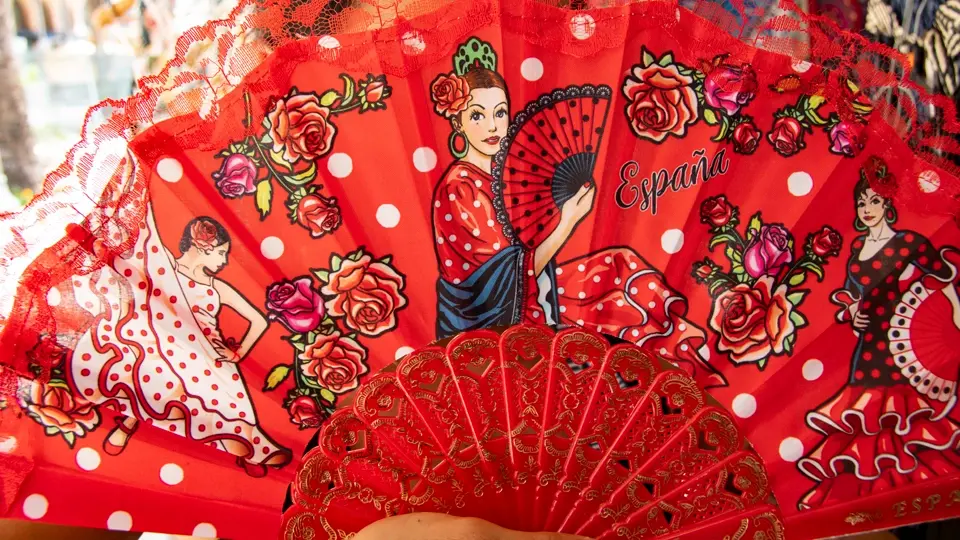
THE FAN IS A LIVING TRADITION, NOT A RELIC OF THE PAST
It adapts, transforms, and dialogues with the present. Its strength lies in its ability to reinvent itself without losing its essence.
Telling this story from a local, expert, and intimate perspective is part of our work as an agency that specializes in Spanish culture. Sometimes, to understand a country, you just need to observe how the air moves between the ribs of a fan.
In Spain, that air continues to tell stories.